
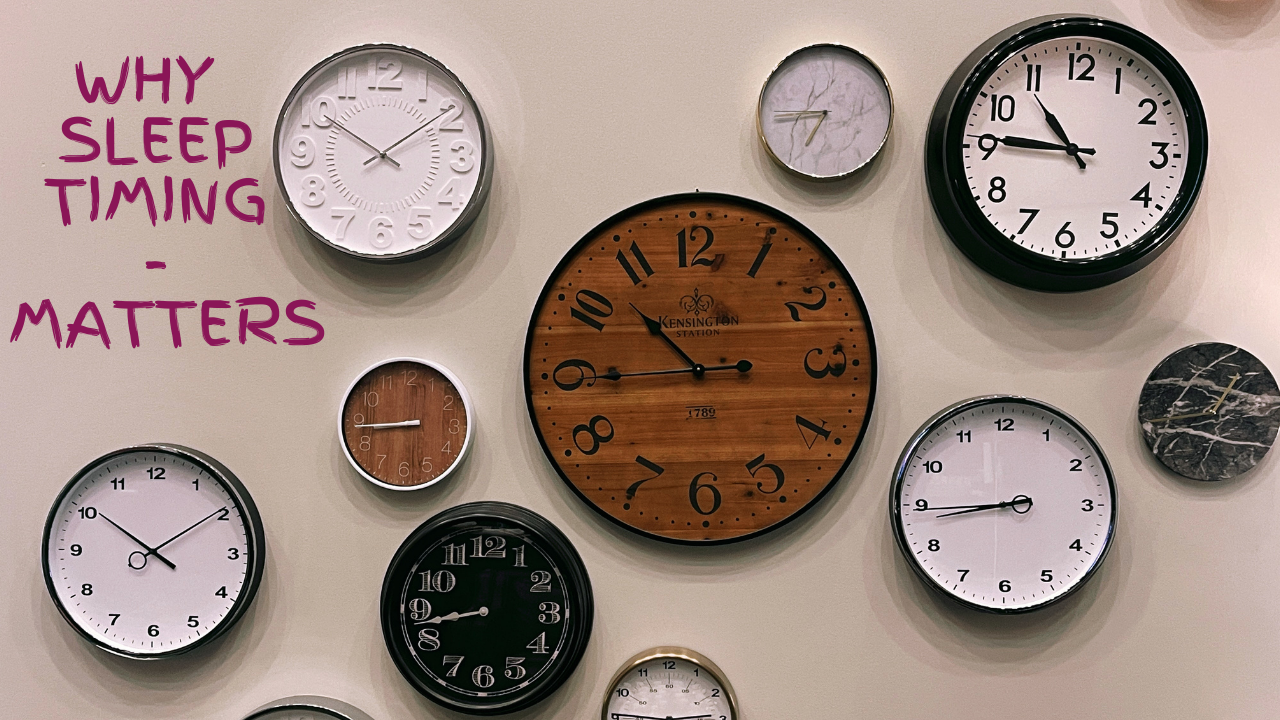
There's one single piece of advice that's universal amongst all sleep experts and researchers. It's to have a consistent bedtime and rising time. This can seem impossible in a culture where we essentially have control over the sun (our indoor lighting). Why does that matter? I'll share a few examples and you'll hopefully have a good laugh at how annoying it is for the human body to change up the schedule too often.
Simple Steps for Using a Sleep Journal
Using a sleep journal re-connects you to your habits and can make a difference in just a week's time. If you want to implement this with fitness clients, check out my Sleep Coach Course with NFPT.
In this video:
What to record in a sleep journal
How to use a sleep journal for yourself and clients
Two examples of people making small changes
Early Dinner - Early Bedtime
One way to ensure an early enough bedtime (to get the sleep you need) is to eat earlier in the evening. Getting enough sleep is a non-negotiable, essential component to wellness. Our bodies perform tasks while we are asleep that are not possible when awake, so it’s important to allow for these events to happen.
Find Your Magic Sleep Number
Five Things To Do Instead of Screens Before Bed
Which Comes First - Exercise or Rest
Motherhood Dance Poem
Someday I won’t trip over so many things on the floor.
But, those cute little shoes won’t be there anymore.
Someday the kitchen will be clean for hours all day.
But, I won’t share my meals with your sweet face.
Someday the hours will pass with nothing to do.
I’ll sit here and be missing you.
One day I will sink into my couch for as long as a I can.
Yet, I won’t be able to touch your small hands.
I’ll dance around in the open space.
But, I’ll miss the indulgence of your frequent embrace.
I am so smushed but also set free.
The contractions of motherhood are a heart beat.
Ride the waves, the yin and the yang.
The intense moments pass again and again.
And again and again and again and again.
Rainbows emerge and laughter trickles across the land.
As you and I sway in this dance.
Resisting Darkness
Thoughts From My Cervical Spine (Neck)
Three Lessons from my Sleep Study
How Meditation Class Disrupted My Sleep
Active Rest for Better Sleep
Standing Posture Visualization Audio
Bedtime Routine for Better Sleep
How Does Stress Effect Sleep?
Once you sound the stress alarm bell, your body produces stress hormones to help you cope. One hormone, cortisol, is produced fresh with each stressful episode and it stays in your body until it is metabolized out. Excess cortisol disrupts sleep. Which results in daytime fatigue.
You feel tired when you want and need to be awake and you are awake during times you want to be asleep. Frustrating.
Lower Leg Movement Visualization
Movement starts at your feet (when walking, hiking, etc.). The feet have the most bones in the human body. The knees react to the feet when you are weight bearing. When seated in a chair you can strengthen the knee joint without the influence of your hips and feet.
That’s what this experience is all bout.Treat your knees and feet to these movements. Review the many movements of the lower leg.
Tibial internal and external rotation
Knee flexion and extension
Plantar flexion and Dorsi flexion
Inversion and Eversion
You can follow this audio right from your chair.
My Partner is Keeping Me Awake at Night
Your Brain Has a Sleep Program
Your brain has a program to run every night. There are consequences of cutting it short. You need enough of the five different kinds of sleep every night. Just like you need food, water, exercise, relationships, etc. every day.
Pelvis & Hip Movement Visualization
The hips support the spine.
The hip joint can flex, extend, rotate and circumduct, it has a lot of motion!
The sacrum, coccyx and two hip bones make up the pelvis.
21 muscle cross your hip joint to move it.
Move your hips to open them up and tune in with this audio. Enjoy the added mobility and stability.